Ancient Origins of Iolite
1.1Discovery in Early Civilizations
The name Iolite comes from the Greek word “ios,” meaning violet. Although the gemstone became famous during the Viking Age, its earliest usage traces back to Greek and Roman civilizations, where it was prized for its color and clarity.
These early cultures believed iolite symbolized:
-
Vision
-
Truth
-
Inner strength
-
Spiritual clarity
1.2 Iolite’s Geological Birth
Iolite forms naturally in metamorphic rocks rich in aluminum, magnesium, and iron. It can be found in high-pressure, medium-temperature environments, often alongside:
-
Garnet
-
Sillimanite
-
Biotite
Some of the world’s finest iolite comes from India, Sri Lanka, Brazil, Myanmar, and Africa.
2. Iolite in the Viking Age — “The Compass Stone”
2.1 Navigation Using Iolite
One of the most fascinating historical uses of iolite comes from the Vikings. These Nordic explorers used iolite as an early form of a polarizing filter to locate the sun’s position, even on cloudy days or when the sun was below the horizon.
Because iolite shows different colors depending on light direction, the Vikings rotated a thin iolite crystal to:
-
Identify the sun’s angle
-
Determine direction
-
Navigate vast oceans safely
This is why iolite is famously known as the “Vikings’ Sunstone” or “Compass Gem.”
2.2 Symbolism in Viking Culture
The Vikings believed iolite represented:
-
Protection during travel
-
Courage
-
Guidance from the gods
-
Clear vision and decision-making
Many historians believe Viking captains carried polished iolite stones in leather pouches as both a tool and a talisman.

3. Iolite Through Medieval & Renaissance Times
3.1 Medieval Spiritual Use
During the medieval era, iolite was associated with:
-
Enhancing inner vision
-
Strengthening intuition
-
Purifying thoughts
Healers and mystics used iolite to assist monks, saints, and scholars in meditation and spiritual practices.
3.2 Renaissance Appreciation
In Renaissance Europe, iolite gained popularity among:
-
Royal jewelers
-
Travelers
-
Navigators
-
Artists
It was often set in gold jewelry, religious ornaments, and ceremonial weapons.
4. Iolite in Modern Gemstone History
4.1 Rise in the 20th Century
Iolite became more recognized in the global gemstone market during the 20th century. Jewelers loved it for its:
-
Sapphire-like color
-
Affordability
-
Durability
-
Pleochroic beauty
4.2 Modern Sources
Today, the leading producers of iolite include:
-
India (Especially Tamil Nadu & Rajasthan)
-
Sri Lanka
-
Tanzania
-
Mozambique
-
Brazil
-
Madagascar
India is currently a major cutting and polishing hub for high-quality iolite gemstones.
5. Iolite Varieties & Color Types
Iolite’s beauty lies in its rich variations. The most popular types include:
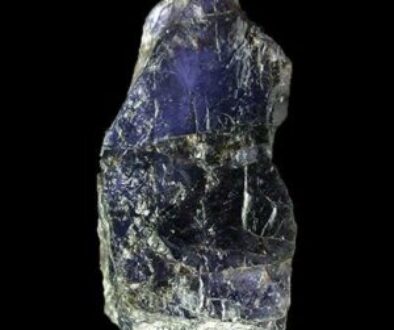
5.1 Deep Violet-Blue Iolite
This is the most valuable variety, displaying sapphire-like shades.
5.2 Light Blue Iolite
More affordable but still very beautiful.
5.3 Grey-Violet Iolite
A modern favorite in minimalistic jewelry.
5.4 Yellow-Brown Pleochroic Iolite
Visible when gem is rotated—unique and scientifically fascinating.
5.5 Iolite Sunstone
A rare variety found in India and USA, containing sparkling inclusions.
6. Properties of Iolite
6.1 Physical Properties
-
Hardness: 7–7.5 (Durable for jewelry)
-
Lustre: Vitreous (glass-like shine)
-
Transparency: Transparent to translucent
-
Structure: Orthorhombic crystal system
6.2 Optical Properties
-
Trichroism (three colors)
-
Strong pleochroism
-
Deep blue brilliance
-
Natural clarity
7. Metaphysical & Healing Properties of Iolite
7.1 Mental and Emotional Benefits
Iolite is believed to:
-
Strengthen focus and clarity
-
Reduce stress and confusion
-
Improve decision-making
-
Support emotional balance
7.2 Spiritual Benefits
-
Enhances intuition
-
Opens the third-eye chakra
-
Helps in meditation
-
Increases spiritual awareness
7.3 Physical Healing Traditionally Believed
(Not medical advice)
Iolite has been traditionally used for:
-
Improving eyesight
-
Detoxification
-
Strengthening nerves
-
Boosting sleep quality
8. Uses of Iolite
8.1 Jewelry
Iolite is used in:
-
Rings
-
Earrings
-
Pendants
-
Bracelets
-
Beads
-
Men’s jewelry
It is often chosen as a more affordable alternative to blue sapphire.
8.2 Industrial Uses
Rare, but used in geology and optical equipment.
8.3 Spiritual & Personal Uses
-
Meditation stone
-
Chakra balancing
-
Travel protection
-
Vision enhancement rituals
9. How to Identify Real Iolite
9.1 Check the Pleochroism
Rotate the stone — if it shows:
-
Blue
-
Grey
-
Yellow/Brown
→ It’s real iolite.
9.2 Hardness Test
Real iolite does not scratch easily.
9.3 Inclusion Pattern
Natural iolite often has slight internal lines or color zoning.
9.4 Lab Testing
IGI, GIA, or gemstone labs can confirm authenticity.
10. Where Iolite Is Found Globally
Top producing regions:
-
India
-
Sri Lanka
-
Brazil
-
Madagascar
-
Tanzania
-
USA (small deposits)
India remains one of the top exporters of finished iolite gems.
11. How to Care for Iolite Jewelry
-
Avoid harsh chemicals
-
Clean with mild soap and water
-
Store separately to avoid scratches
-
Avoid extreme heat
12. Conclusion
Iolite is one of the world’s most magical gemstones—rich in history, beauty, and spiritual meaning. From guiding Viking explorers across oceans to becoming a favorite in modern jewelry, iolite continues to fascinate gemstone lovers globally.
Whether you want it for its deep blue sparkle, its powerful symbolism, or its affordable luxury, iolite is a gemstone that truly stands out.